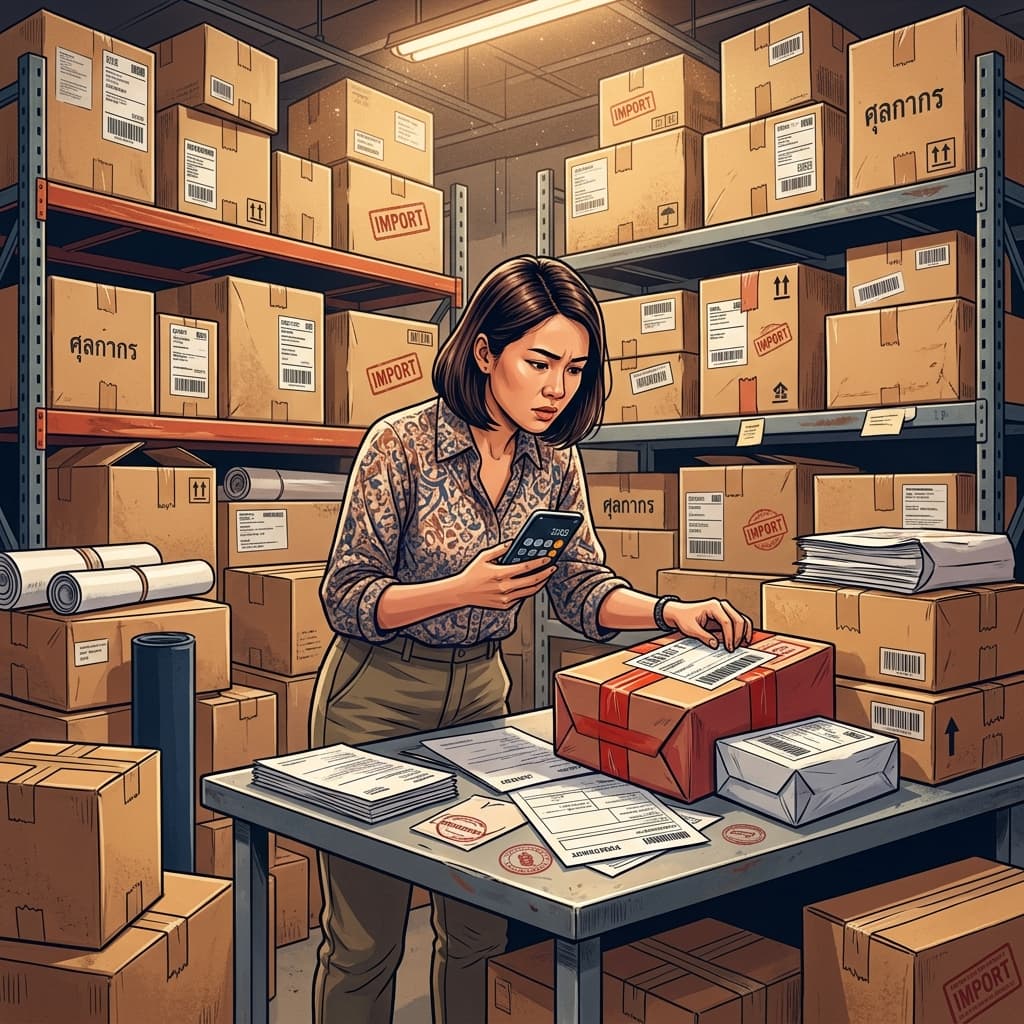
Import Tax From the First Baht: How It Affects Thai Sellers and What to Adjust in 2026
Why this matters to local sellers
The discussion around import tax collection from the first baht is not just a macroeconomic story. It directly affects price competition inside Thai marketplaces. For years, many local sellers have had to compete against ultra-low-priced imports that appeared artificially cheap once tax loopholes and cross-border cost advantages were factored in.
As enforcement tightens, imported goods may lose part of that pricing advantage. For Thai sellers, this creates opportunity, but not automatic success. A fairer cost structure only helps if local shops respond with better positioning, cleaner pricing, and stronger service communication.
What is really changing
The most important shift is that low-value imports are less likely to pass through the system with the same historical advantage. Once VAT and import-related costs are reflected more clearly, customer comparison behavior changes. Price still matters, but perceived value, shipping speed, product trust, and after-sales support start carrying more weight.
How Thai sellers should adapt
Recalculate margins from scratch
Many local sellers still benchmark against price points that were shaped by distorted import economics. This is the right time to review actual cost structure: product cost, platform fees, packaging, shipping support, promotions, and advertising.
Sell value, not only price
Thai sellers can win on speed, easier returns, clearer Thai-language communication, safer quality expectations, and better service responsiveness. If those strengths are not visible on the product page, customers may still compare only on sticker price.
Bundle intelligently
Instead of entering a destructive price war, create sets, packs, or add-on structures that increase perceived value without hurting margin as much as direct discounting would.
This is an opportunity, not a guarantee
It is tempting to think that tighter import rules alone will rescue local merchants. They will not. Shops that still do not understand their own margins, run constant discounts without control, or communicate weakly will remain vulnerable. The better interpretation is that the market may become more rational, and rational markets reward stronger operators more consistently.
References
Want to set more accurate costs and selling prices?
Try Gumrai tools to calculate profit, set prices, and manage back-office tasks to make decisions faster.