Food Cost & Delivery Pricing Guide: How to Calculate Costs and Price for Delivery Apps Without Losing Profit
Why Selling Food on Delivery Apps Requires a Different Cost Strategy Than Dine-In
For modern restaurant businesses, expanding onto delivery apps (such as Grab, LINE MAN, Foodpanda, ShopeeFood) is a golden opportunity to grow sales and reach new customers. However, many restaurant owners face the painful reality of **"selling well but losing money"**—seeing high order volumes but having zero profit at the end of the month.
The root cause is calculating costs and setting prices based on standard dine-in rates, forgetting that delivery platforms take a substantial revenue cut or **GP (Gross Profit) fee** of 30-35%. Additionally, packaging costs for delivery are significantly higher than dine-in. Understanding how to calculate exact food costs and set prices that reflect these variables is essential for the survival of any online restaurant today.
3 Simple Steps to Calculate Your Actual Food Cost
Before pricing your delivery items, you must know your "raw ingredient cost per plate." Here is how to calculate it step-by-step:
1. Weigh, Measure, and Log All Ingredients Per Plate
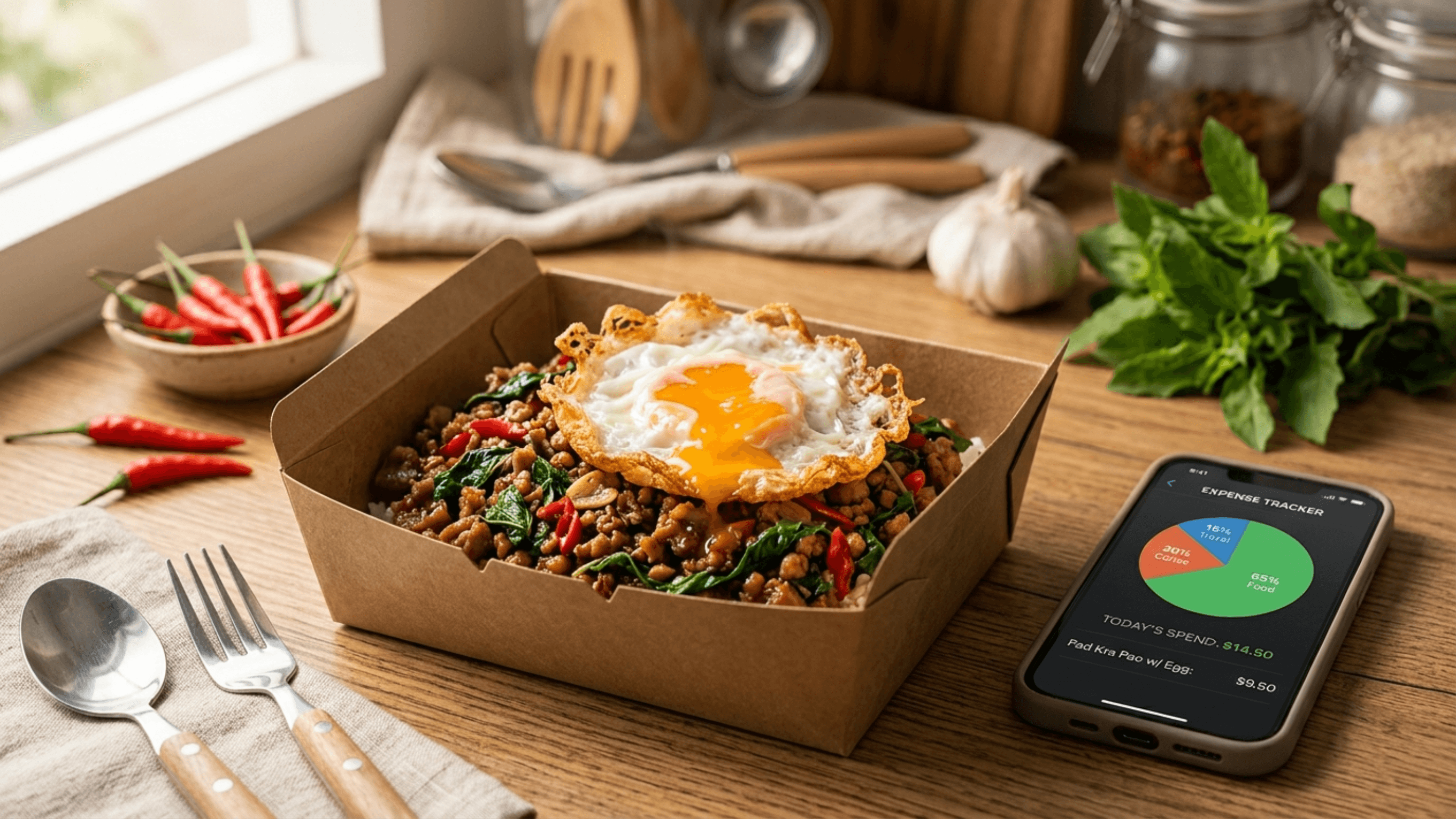
Write down and price every single ingredient used in a dish. For example, a single plate of Basil Minced Pork with Fried Egg (Pad Kra Pao):
- Steamed Rice: 3 THB
- Minced Pork (100g): 15 THB
- Fried Egg (1 egg): 4 THB
- Basil leaves, chilies, garlic, seasonings: 3 THB
- Cooking oil for stir-frying and frying: 2 THB
- Total Ingredient Cost: 27 THB
2. Factor in Packaging and Add-ons (Packaging Cost)
Delivery orders require boxes, plastic utensils, sauce packets, and carrier bags. These are variable costs that scale with every order. If a paper box costs 4 THB, utensils cost 1.5 THB, and a plastic bag costs 1 THB, these add 6.5 THB to the order, raising the total cost of this boxed meal to 33.5 THB.
3. Calculate Your Food Cost Percentage
The formula is (Ingredient Cost / Selling Price) x 100. In the restaurant business, food costs should generally hover around 30-35% of the selling price to leave enough margin for rent, wages, gas, electricity, and other fixed overheads.
How to Calculate Your Delivery Price to Cover GP Fees
The most dangerous mistake is using simplistic math: *“Cost is 30 THB, I want 30 THB profit, so I sell it for 60 THB. The app takes 30% GP (18 THB), leaving me with 42 THB. After subtracting the 30 THB cost, I only get 12 THB profit.”* This margin is too thin and risks hidden losses.
The correct formula to price your delivery items to hit your target profit margin after GP deduction is:
For example, if your food plus packaging costs 35 THB, and you want to keep exactly 30 THB in net profit (totaling 65 THB), and the app charges a 30% GP (0.3 decimal):
- Formula:
65 / (1 - 0.3) - Math:
65 / 0.7 = 92.8 THB(Set your delivery price at around 93-95 THB).
3 Strategies to Optimize Profit and Mitigate GP Impact for Restaurants
- Create Combo Deals (Menu Bundling): Pairing a main dish with a drink or appetizer increases your Average Order Value (AOV). This spreads the fixed packaging costs and GP impact over a larger ticket size, making the transaction more profitable.
- Monitor Inventory and Control Food Waste: Managing fresh stock systematically to avoid waste directly reduces your overall ingredient costs.
- Use Online Calculation Utilities Regularly: Using a calculator prevents mental arithmetic errors and allows you to adjust prices quickly in response to market ingredient price hikes.
Frequently Asked Questions (FAQ)
1. Can I charge more for delivery items than for dine-in?
Yes, and it is highly recommended. Because you absorb GP fees and packaging costs, charging a reasonable premium for delivery is necessary to maintain a sustainable business model.
2. Is the GP fee calculated on the price before or after customer discounts?
Most platforms calculate the GP fee on the full retail price of the food items before any user promo codes or discounts are applied. When running discounts, ensure you factor both GP and discount margins into your baseline price to avoid selling at a loss.
3. Is there a free tool to calculate delivery prices and food costs?
Yes. You can use Gumrai's online Food Cost Calculator to enter ingredients, packaging costs, and GP fees. The tool automatically analyzes the ideal pricing and shows your estimated margins instantly.
Summary
Delivery sales have a vastly different cost structure than dine-in. By analyzing your ingredient costs, factoring in packaging, and applying the correct GP formula, you can transform your restaurant from a busy-but-unprofitable kitchen into a high-performing, sustainable delivery business.
Want to set more accurate costs and selling prices?
Try Gumrai tools to calculate profit, set prices, and manage back-office tasks to make decisions faster.